
How to Drive More Fuel Efficiently?
Discover More On
Sure, using premium fuel might seem like a magic fix for mileage, but it often isn’t necessary for most cars. If your vehicle doesn’t require it, you’re wasting money without any real benefit.
To drive more fuel efficiently, start with smooth acceleration and braking. Maintain steady speeds on highways and use cruise control to reduce fluctuations. Avoid unnecessary idling and plan your trips to minimize driving. Keep your tires properly inflated and remove excess weight from your vehicle. Regular maintenance, like oil changes and checking air filters, is essential too. By adopting these habits, you’ll save money and reduce emissions—there’s even more you can do to enhance your fuel efficiency.
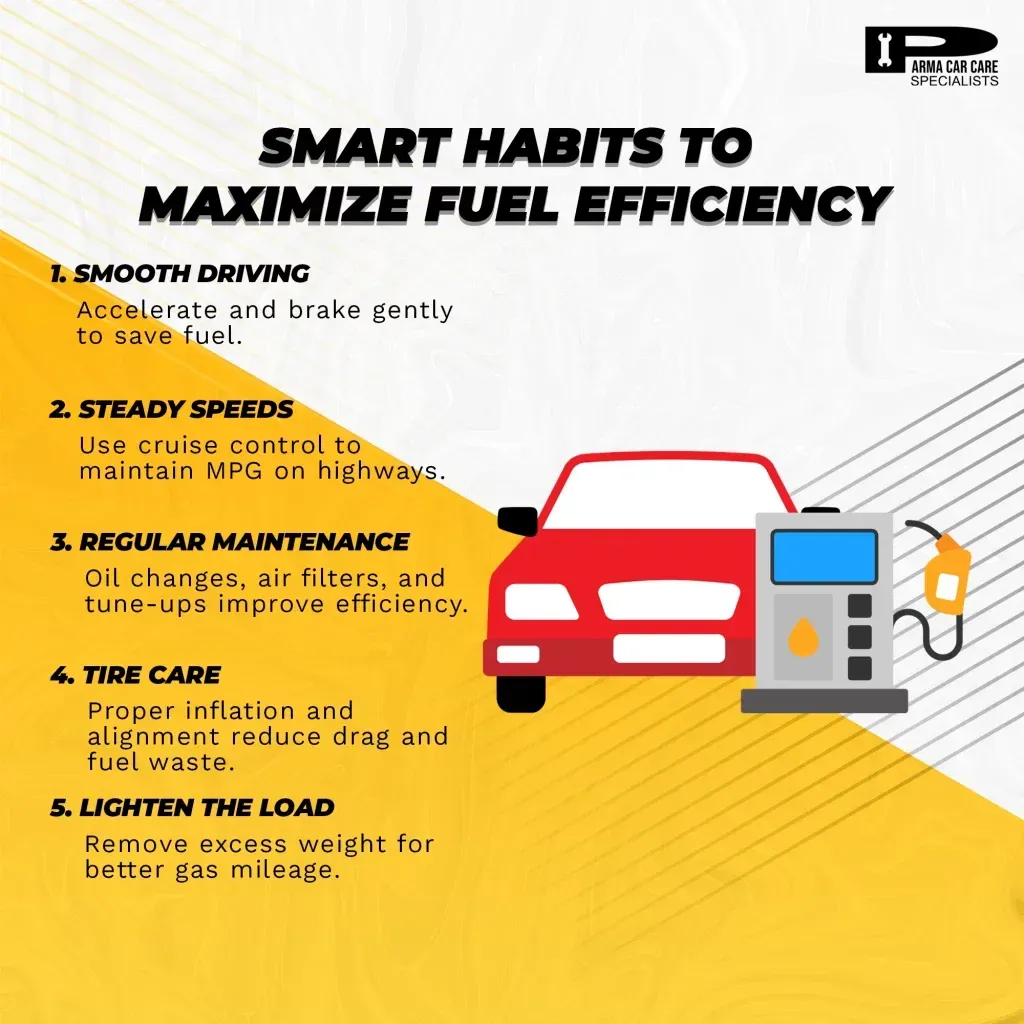
Key Takeaways
- Accelerate smoothly and brake gently to enhance fuel efficiency and avoid rapid speed changes.
- Maintain a steady speed, using cruise control on highways, to improve miles per gallon (MPG).
- Avoid unnecessary idling; turn off the engine when parked or waiting.
- Keep your vehicle well-maintained, ensuring proper tire inflation and regular oil changes.
- Plan trips efficiently to minimize driving distance and reduce overall fuel consumption.
Why Fuel Efficiency Matters for Today’s Drivers
Fuel efficiency matters today because it can save you money at the pump while benefiting the environment. By adopting smarter driving habits, you’ll not only reduce your fuel costs but also cut down on harmful emissions. It’s a win-win situation for both your wallet and the planet.
Saving money at the pump with smarter habits
As gas prices continue to rise, finding ways to save money at the pump has become more important than ever for today’s drivers. One of the best fuel-saving driving tips is to maintain a steady speed, avoiding rapid acceleration and hard braking. Using cruise control on highways can help with this. Additionally, try to plan your trips efficiently to reduce unnecessary driving. Keep your tires properly inflated, as under-inflated tires can decrease fuel efficiency. Regular maintenance, like oil changes and air filter replacements, also plays a vital role. Finally, consider removing excess weight from your vehicle. By adopting these smarter habits, you’ll not only save money but also enjoy a smoother driving experience.
Reducing emissions for a cleaner environment
While driving efficiently can save you money at the pump, it also plays a crucial role in reducing emissions and protecting the environment. By adopting smarter driving habits, you can greatly reduce fuel consumption, which leads to fewer harmful pollutants being released into the air. Simple actions like maintaining a steady speed, avoiding rapid acceleration, and reducing idle time can make a big difference. Additionally, keeping your vehicle well-maintained guarantees it’s running at peak performance, further enhancing fuel efficiency. Choosing to drive less or combining trips can also help minimize your carbon footprint. Remember, every small effort counts towards creating a cleaner environment for future generations. Fuel-efficient driving isn’t just about saving money; it’s about contributing to a healthier planet.
Smart Driving Habits That Improve MPG
To boost your vehicle’s miles per gallon (MPG), adopting smart driving habits can make a big difference. You can start by accelerating and braking smoothly, maintaining steady speeds on the highway, and avoiding unnecessary idling. These simple changes not only improve fuel efficiency but can also enhance your overall driving experience.
Accelerating and braking smoothly
Smoothly accelerating and braking can greatly boost your vehicle’s fuel efficiency. When you practice smooth acceleration and braking, you reduce the amount of fuel your engine uses. Instead of slamming on the gas or brakes, gently press the accelerator and ease off when coming to a stop. This reduces engine strain and allows your car to maintain a steady speed, saving gas in the process. Anticipating traffic signals and road conditions can also help; if you see a red light ahead, gradually slow down instead of waiting until the last moment to brake. By adopting these habits, you’ll not only improve your fuel economy but also extend the life of your brakes and tires, making your driving experience more economical overall.
Maintaining steady speeds on the highway
Maintaining a steady speed on the highway can greatly enhance your fuel efficiency. When you keep your speed consistent, your engine runs more smoothly, which can lead to better miles per gallon (MPG). Avoiding constant acceleration and deceleration helps minimize fuel consumption, so try to use cruise control when conditions allow. This keeps you from speeding up and slowing down unnecessarily. Additionally, staying within the speed limit not only promotes safety but also optimizes your fuel usage. Remember, maintaining a steady speed isn’t just about driving; it’s about planning ahead and anticipating traffic flow. By adopting this habit, you’ll not only save money at the pump but also contribute to a more eco-friendly driving experience.
Avoiding unnecessary idling
While waiting in your car might seem harmless, unnecessary idling can greatly waste fuel and hurt your MPG. To drive more efficiently, consider turning off your engine if you expect to be stationary for more than a minute or two. This simple action can considerably reduce fuel consumption. If you’re waiting for someone or stuck in traffic, try to minimize engine idling whenever possible. Also, be mindful of your vehicle’s systems; using air conditioning while idling can further decrease efficiency. By actively working to reduce engine idling, you’ll not only save fuel but also reduce wear on your engine. Adopting these habits can lead to a noticeable improvement in your vehicle’s overall fuel efficiency.
Vehicle Maintenance Tips for Better Fuel Economy
To improve your vehicle’s fuel economy, regular maintenance is key. Make sure your tires are properly inflated and aligned, change your oil on schedule, and keep your air filters clean. Don’t forget to check your spark plugs and fuel system components, as these can also impact your gas mileage.
Keeping tires properly inflated and aligned
Properly inflated and aligned tires can greatly boost your vehicle’s fuel efficiency. Maintaining the correct tire pressure is essential; under-inflated tires create more rolling resistance, which means your engine has to work harder and consumes more fuel. Regularly check your tire pressure, ideally once a month, and before long trips. Additionally, wheel alignment plays an important role in your vehicle’s performance. Misaligned tires can lead to uneven wear and increased drag, negatively impacting fuel economy. If you notice your vehicle pulling to one side or uneven tire wear, it’s time for an alignment. By keeping your tires in top condition, you’ll not only save money at the pump but also enhance your overall driving experience.
Regular oil changes and clean air filters
One of the simplest ways to improve your vehicle’s fuel efficiency is by keeping up with regular oil changes and ensuring your air filters are clean. Fresh oil reduces friction in your engine, allowing it to run smoothly and efficiently, which directly impacts fuel economy. Dirty oil can lead to engine wear and decreased performance. Similarly, a clean air filter guarantees that your engine gets the ideal amount of air, which is essential for effective combustion. When your engine breathes better, it performs better, resulting in improved mileage. By prioritizing these key aspects of car maintenance for better mileage, you can enjoy a smoother ride and save money on fuel in the long run. Regular checks can make all the difference.
Checking spark plugs and fuel system components
Maintaining your vehicle’s fuel efficiency goes beyond just regular oil changes and clean air filters. One essential aspect is checking spark plugs and fuel system components. Worn or dirty spark plugs can lead to incomplete combustion, decreasing your engine’s efficiency. It’s important to inspect them regularly and replace them if they’re worn out. Additionally, keep an eye on your fuel system components, such as fuel injectors and filters. Clogged injectors can restrict fuel flow, affecting performance and fuel economy. Regular maintenance of these components not only enhances your vehicle’s efficiency but also prolongs its lifespan. By staying proactive with these checks, you’ll guarantee a smoother ride and save money at the pump.
Common Mistakes That Waste Fuel
When it comes to fuel efficiency, small mistakes can add up quickly. You might not realize that carrying extra weight, ignoring warning lights, or skipping regular maintenance can seriously impact your gas mileage. Let’s explore these common pitfalls and how avoiding them can help you save fuel.
Carrying excess weight in your vehicle
Carrying excess weight in your vehicle can greatly impact your fuel efficiency, and many drivers overlook this common mistake. Every extra pound requires more energy to move, which means you’re burning more fuel. If you regularly carry heavy items, consider removing them when they’re unnecessary. Aim for a lightweight vehicle load to optimize your fuel consumption. For instance, emptying your trunk of unused tools or sports equipment can make a noticeable difference. Additionally, think about the roof racks or cargo carriers; they can create extra drag and weight. By reducing the load your vehicle has to carry, you’ll not only save on fuel costs but also improve your overall driving experience. Make these adjustments, and you’ll drive more efficiently.
Ignoring dashboard warning lights
Ignoring dashboard warning lights can lead to significant fuel inefficiency, much like carrying excess weight in your vehicle. When those lights illuminate, they’re signaling potential issues that could affect your car’s performance and fuel consumption. For instance, a malfunctioning engine or transmission can cause your car to work harder, burning more fuel than necessary. It’s essential not to dismiss these warnings. Addressing them promptly can keep your vehicle running smoothly and efficiently. Additionally, when planning your fuel-efficient route, a well-maintained vehicle is more likely to follow through on those planned savings. So, don’t ignore those lights—take action to guarantee your car is in top shape, and you’ll reap the benefits at the gas pump.
Skipping routine maintenance
Although it might seem tempting to skip routine maintenance, doing so can considerably impact your vehicle’s fuel efficiency. Neglecting oil changes, air filter replacements, and tire rotations can lead to decreased performance and increased fuel consumption. When your engine isn’t running smoothly, you’ll likely waste more gas. Regular maintenance guarantees that your vehicle operates at peak efficiency, allowing you to implement effective driving techniques to save fuel. Keeping your tires properly inflated and your engine tuned can make a noticeable difference in how far you go on a tank. So, don’t overlook those scheduled services; they’re essential to maintaining your car’s health and maximizing fuel efficiency. Prioritize routine maintenance, and you’ll enjoy better gas mileage and a more reliable ride.
Maximize Fuel Efficiency with Parma Car Care Specialists
To maximize your fuel efficiency, scheduling preventative maintenance with Parma Car Care Specialists is key. Their ASE-certified technicians can spot issues before they start costing you at the pump. Book your next service today and watch your fuel savings grow!
Schedule preventative maintenance to keep your car running efficiently
When you schedule preventative maintenance for your vehicle, you’re not just prolonging its lifespan; you’re also optimizing its fuel efficiency. Regular check-ups guarantee your engine runs smoothly, your tires are properly inflated, and your fluids are at the right levels. All these factors contribute to better gas mileage, making your driving experience more eco-friendly. By following these practices, you can develop eco-friendly driving habits that further enhance your vehicle’s performance. Whether it’s an oil change or a tire rotation, don’t overlook the importance of maintenance. By staying proactive, you’ll keep your car running efficiently and save money at the pump. Trust the experts at Parma Car Care Specialists to help you maintain your vehicle’s efficiency and overall health.
ASE-certified technicians who spot issues before they cost you at the pump
At Parma Car Care Specialists, our ASE-certified technicians are trained to identify potential issues before they become costly problems at the pump. Regular inspections can help pinpoint issues like worn spark plugs or low tire pressure that can hinder your vehicle’s performance. Addressing these concerns means you can enjoy more efficient highway driving and avoid unnecessary fuel expenses. Our team uses advanced diagnostic tools to guarantee your vehicle runs smoothly, providing you with peace of mind on long trips. By catching these problems early, you’ll not only save money on fuel but also enhance your vehicle’s overall lifespan. Trust our experts to help you maintain peak fuel efficiency—your wallet will thank you!
Book your next service today and start saving on fuel
Don’t wait any longer to book your next service with Parma Car Care Specialists and start saving on fuel! Regular maintenance is essential for keeping your vehicle running efficiently. Our ASE-certified technicians can identify issues that might be affecting your fuel economy, ensuring you’re always driving at the best speed for fuel efficiency. Whether it’s checking tire pressure, ensuring proper alignment, or changing the oil, every service helps optimize your vehicle’s performance. By staying on top of maintenance, you can avoid costly repairs down the line and keep your fuel costs down. Contact us today to schedule your service appointment and take the first step towards a more fuel-efficient drive!
Frequently Asked Questions
How Does Tire Pressure Affect Fuel Efficiency?
Tire pressure greatly affects fuel efficiency. When your tires are under-inflated, it creates more rolling resistance, causing your vehicle to use more fuel. Regularly checking and maintaining proper tire pressure can enhance your fuel economy.
Does Driving Speed Influence Fuel Consumption?
Yes, driving speed does influence fuel consumption. Generally, maintaining a moderate speed can improve efficiency. Higher speeds often lead to increased air resistance, which means your vehicle uses more fuel than necessary.
Can Using Premium Fuel Improve Mileage?
Sure, using premium fuel might seem like a magic fix for mileage, but it often isn’t necessary for most cars. If your vehicle doesn’t require it, you’re wasting money without any real benefit.
What Role Does Weight Play in Fuel Efficiency?
Weight considerably impacts fuel efficiency; the heavier your vehicle, the more energy it needs to move. Reducing unnecessary items can enhance mileage, so consider decluttering your car to improve performance and save on fuel costs.
Are There Specific Routes That Maximize Fuel Economy?
Choosing routes with fewer stops can boost fuel economy greatly; studies show it can improve efficiency by up to 30%. Avoiding heavy traffic and opting for highways instead of city roads helps maximize your fuel economy.
Conclusion
In a world where every drop of fuel counts, think of your car as a trusty steed galloping towards greener pastures. By adopting smarter driving habits and keeping up with maintenance, you can guarantee your journey is both economical and eco-friendly. Just like a well-tuned engine purrs with efficiency, your wallet will thank you at the pump. So, saddle up and ride into a future where you save money and protect our planet, one mile at a time.

About the author:
Fred Cerny
Fred Cerny has owned Parma Car Care Specialist since 1989, steadily expanding the business from its humble beginnings with just three bays to a modern facility with eleven bays today. With over 40 years of automotive service and repair experience, Fred has become a trusted name in the community.
He is a certified Master ASE Technician, holding certificates in all nine ASE areas, demonstrating his comprehensive expertise. His background includes a degree in electrical engineering, which has proven to be a valuable asset in diagnosing and repairing today’s increasingly complex vehicles.
Throughout his career, Fred has built a reputation for consistently getting the job done right the first time, emphasizing quality workmanship and professionalism. He is known for his attention to detail and his commitment to customer satisfaction. Fred treats his clients like family, earning their trust and loyalty through honest service and transparent communication.
Under his leadership, Parma C.C.S. has grown not only in size but also in reputation, becoming a go-to destination for reliable automotive care in the area. His dedication to excellence and his passion for cars continue to drive the success of the business, making it a trusted name for vehicle repair and maintenance in the community.
