
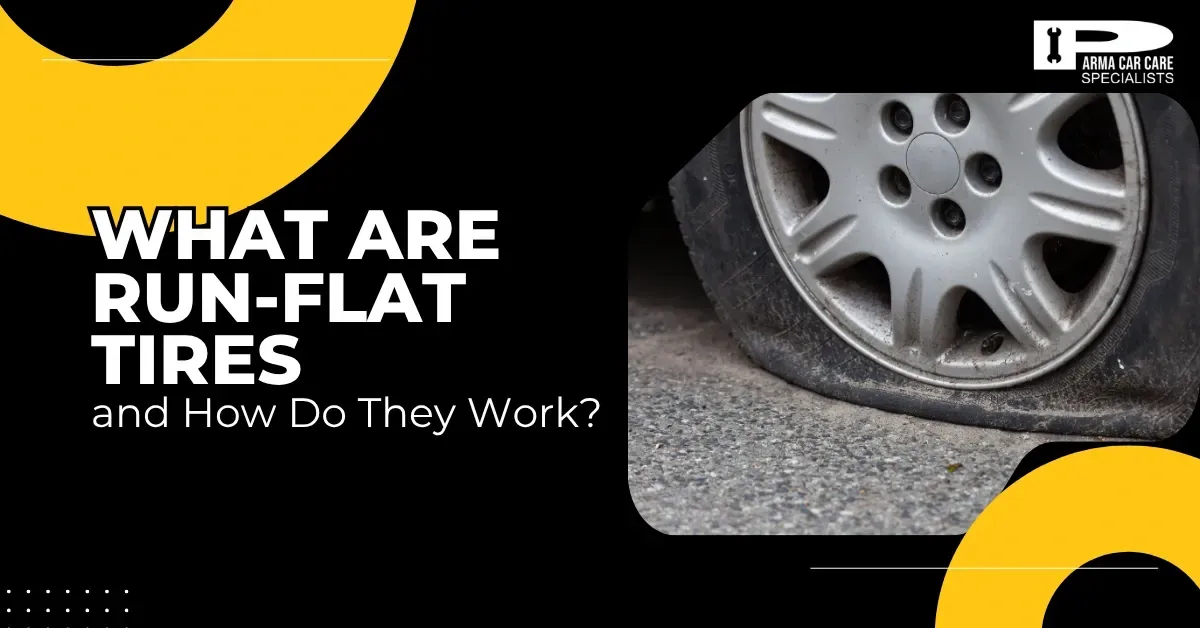
Run-Flat Tires: Benefits and Drawbacks
Discover More On
Run-flat tires sound pretty great on paper: get a puncture, keep driving, and avoid changing a tire on the side of the road. For a lot of drivers, that extra safety and convenience is a big plus—especially at night or in bad weather.
But run-flats aren’t perfect. They usually cost more, ride stiffer, and can be harder (or impossible) to repair. Before you switch, it’s smart to understand how they work, where they shine, and where they fall short—and when it makes sense to talk to a trusted mechanic in Parma, OH, for advice.
Key Takeaways
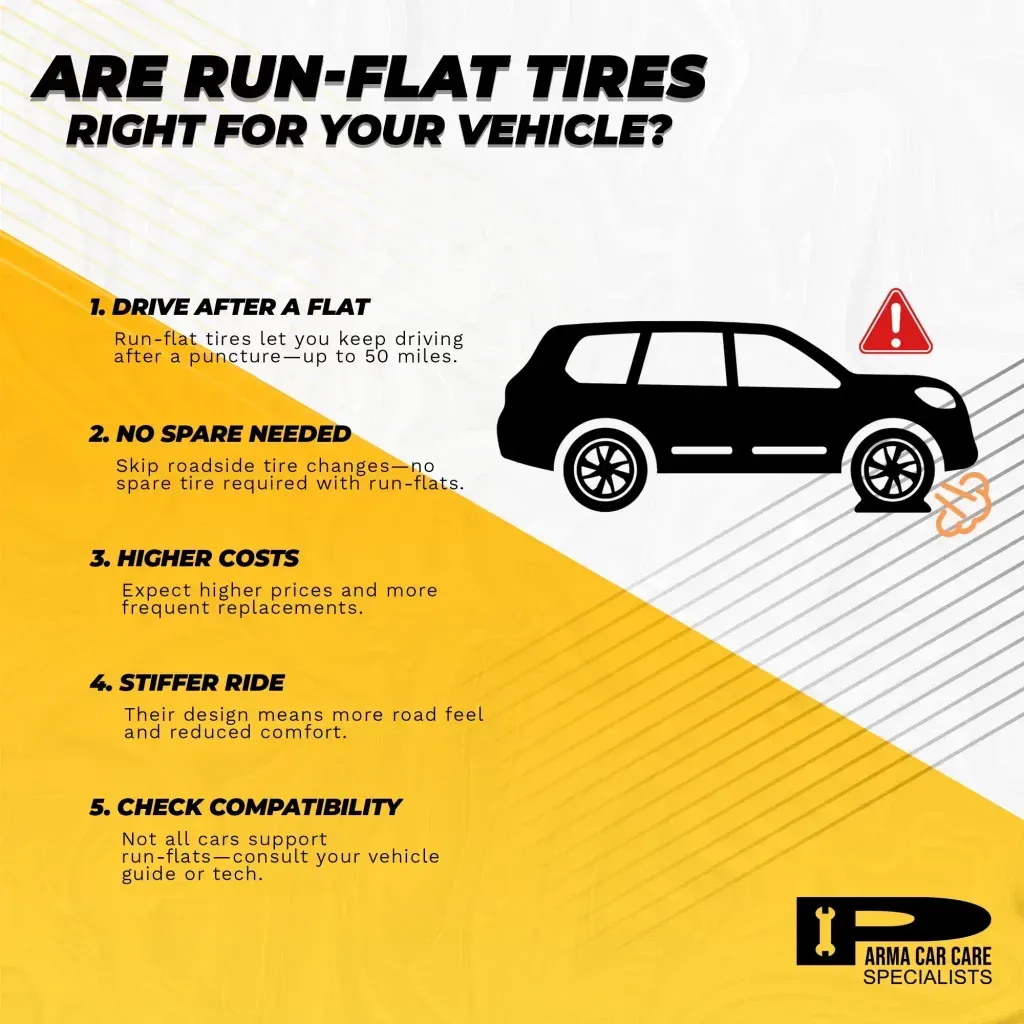
- Run-flat tires let you keep driving for a limited distance after a puncture, improving safety and convenience.
- They often eliminate the need for a spare tire and roadside tire changes.
- Drawbacks include higher cost, limited repair options, and a firmer, noisier ride.
- Run-flats may have a shorter lifespan and require closer monitoring of tire pressure.
- Not every vehicle is compatible—your wheels, suspension, and TPMS all need to be considered.
What Are Run-Flat Tires and How Do They Work?
Run-flat tires are designed to keep supporting your vehicle even after losing air pressure from a puncture. Instead of going completely limp like a standard tire, they’re built to hold their shape long enough to get you to a safe place or repair shop.Most run-flats allow you to travel up to about 50 miles at around 50 mph once they’ve lost pressure (always check the specific guidelines for your tire brand). That’s usually enough to get off the highway, out of a sketchy area, and into a shop.
Key Differences from Standard Tires
The big difference comes down to construction. Run-flat tires typically feature:
- Reinforced sidewalls that can carry the weight of the vehicle without air.
- Special bead designs to keep the tire seated on the rim when deflated.
- Often, they’re paired with tire pressure monitoring systems (TPMS) because you might not feel the puncture the way you would with a regular tire.
Standard tires typically require an immediate halt, a spare, or a tow in case of a puncture, whereas run-flats allow you to continue driving—though within certain restrictions.
How They Maintain Driveability After a Puncture
When a normal tire loses air, the sidewall collapses, and the tire deforms. That’s when you feel the “wobble” or see the tire shredded.
Run-flats are different:
- Their reinforced sidewalls support the vehicle even when the tire is at or near zero pressure.
- The tire keeps its general shape so you maintain steering control and stability.
- You still need to slow down and drive gently, but you’re not forced into a risky roadside change.
Because you might not always feel a run-flat go down, if your TPMS or warning lights pop on, it’s wise to get checked out quickly—paired with something like engine diagnostics if you’ve got any other warning lights lit up on the dash.
Benefits of Using Run-Flat Tires
Run-flats shine in two big areas: safety and convenience.
Enhanced Safety and Reduced Risk During Blowouts
A sudden blowout at speed is one of the scariest things that can happen behind the wheel. Run-flat tires are engineered to:
- Help you maintain better control when air pressure is lost.
- Reduce the chance of the tire coming off the rim or shredding instantly.
- Give you time to reach a safe place instead of forcing an emergency stop on the shoulder.
That extra stability during a puncture or blowout can make a huge difference when you’re on a busy highway or in bad weather.
No Immediate Need for Roadside Tire Changes
Changing a tire on the shoulder—even in daylight—isn’t fun or safe. With run-flats:
- You don’t have to change the tire immediately after a puncture.
- You can usually drive to a shop or your home within the allowed distance and speed.
- Many vehicles equipped with run-flats don’t carry a spare tire, which frees up trunk space.
For people who drive at night, in unfamiliar areas, or just don’t want to deal with roadside changes, this alone can be a huge selling point.
Drawbacks to Consider with Run-Flat Tires
All those benefits come with trade-offs. Before switching, it’s important to understand where run-flats fall short.
Limited Repair Options and Higher Replacement Costs
Run-flats are more complex than standard tires, and that shows up in both repair and replacement:
- Many shops won’t patch run-flat tires , especially if they’ve been driven on while flat.
- You’re more likely to be buying a full replacement instead of getting a simple plug/patch.
- Run-flats usually cost more per tire than equivalent standard tires.
If you’re on a tight budget, it might sting to find out a small nail can mean a pricey new tire instead of a cheap repair. This is one reason some drivers compare multiple car repair shops and tire specialists before committing to a run-flat setup.
Stiffer Ride Quality Compared to Standard Tires
Because of their reinforced construction, run-flats tend to ride firmer than regular tires. That can mean:
- You feel more bumps and road imperfections .
- There may be more cabin noise on rough surfaces.
- The overall ride can feel harsher, especially on older or rougher roads.
For some drivers, the peace of mind outweighs the comfort trade-off. For others, especially those who value a cushy ride, the difference may be a dealbreaker.
Is a Run-Flat Setup Right for Your Vehicle?
Run-flats aren’t a universal “yes” or “no.” They’re a tool that works well for some vehicles and driving styles—and not as well for others.
Evaluating Driving Habits and Road Conditions
Ask yourself a few questions:
- Do you travel long distances or commute on highways daily?
- Do you drive in areas where it would be unsafe or difficult to change a tire?
- Are you often far from repair shops or service stations?
- Do you prefer the convenience of not dealing with a spare tire?
If you answered “yes” to several of these, run-flats might be worth serious consideration. If you mostly drive short, local trips and don’t mind the idea of changing a tire or calling roadside assistance, regular tires might be just fine.
Understanding Vehicle Compatibility and Maintenance Needs
Not every vehicle is designed for run-flat tires. Before switching, you’ll want to confirm:
- Wheel and suspension compatibility – Some cars are tuned specifically for run-flats; others may ride poorly if you add them.
- TPMS function – Because you might not feel a flat the same way, a working tire pressure monitoring system is extra important.
- Manufacturer recommendations – Many modern vehicles that come with run-flats from the factory are optimized for them.
Your best bet is to talk with an experienced mechanic in Parma, OH, who understands both run-flats and your specific vehicle. They can help you weigh your options, check compatibility, and make sure your TPMS and alignment are set up correctly. If you’re seeing any warning lights at the same time you’re having tire or ride issues, pairing that visit with a quick check engine light diagnosis can give you a complete picture of what’s going on.
Frequently Asked Questions
What is the lifespan of run-flat tires?
In general, run-flats wear similarly to regular tires of the same quality and treadwear rating. However:
- Some drivers see slightly shorter lifespans due to the stiffer construction and how they’re used.
- Driving on a run-flat after a puncture, even within limits, can mean it must be replaced, not repaired.
- As with any tire, rotation, alignment, proper inflation, and driving habits all have a big impact on life expectancy.
Checking your tires regularly—and letting a shop inspect them during routine maintenance—will help you spot wear or damage early.
Conclusion
Run-flat tires are all about trade-offs. On the upside, they offer real peace of mind: if you get a puncture, you can usually keep driving to a safer spot instead of wrestling with a jack on the shoulder. On the downside, they cost more, may ride harsher, and are often harder to repair.Whether they’re right for you depends on how and where you drive, your comfort priorities, and your budget. If you’re on the fence, a quick conversation with a trusted mechanic in Parma, OH, can help you weigh your options for your specific vehicle and driving style—so you can choose the setup that keeps you safest and most comfortable on the road.

About the author:
Fred Cerny
Fred Cerny has owned Parma Car Care Specialist since 1989, steadily expanding the business from its humble beginnings with just three bays to a modern facility with eleven bays today. With over 40 years of automotive service and repair experience, Fred has become a trusted name in the community.
He is a certified Master ASE Technician, holding certificates in all nine ASE areas, demonstrating his comprehensive expertise. His background includes a degree in electrical engineering, which has proven to be a valuable asset in diagnosing and repairing today’s increasingly complex vehicles.
Throughout his career, Fred has built a reputation for consistently getting the job done right the first time, emphasizing quality workmanship and professionalism. He is known for his attention to detail and his commitment to customer satisfaction. Fred treats his clients like family, earning their trust and loyalty through honest service and transparent communication.
Under his leadership, Parma C.C.S. has grown not only in size but also in reputation, becoming a go-to destination for reliable automotive care in the area. His dedication to excellence and his passion for cars continue to drive the success of the business, making it a trusted name for vehicle repair and maintenance in the community.
