
Transmission Troubles: Early Signs and What to Do
Discover More On
Transmission troubles can start from fluid leaks, wear and tear on components, or inadequate lubrication. Early signs include slipping gears, delayed shifts, and unusual noises. If you notice these issues, it’s essential to assess safety and avoid driving. Documenting symptoms helps technicians diagnose the problem more efficiently. Regular maintenance is key to preventing significant failures. By addressing these symptoms, you can save on costly repairs and keep your vehicle running smoothly. Discover more on how to take action.
What Causes Transmission Problems to Start in the First Place?
Transmission problems often start due to common wear issues, such as fluid leaks or inadequate lubrication, which can progressively affect performance. You might notice early symptoms like slipping or delayed shifting, but these signs often appear gradually, making them easy to overlook. Understanding these causes can help you address problems before they escalate into more serious issues.
Common wear issues that lead to transmission trouble
When it comes to vehicle performance, several common wear issues can lead to transmission trouble over time. One major concern is fluid degradation; over time, transmission fluid can lose its effectiveness, resulting in inadequate lubrication and overheating. Worn clutches and bands can also cause slipping, which are clear signs of transmission trouble. Additionally, damaged gears may produce unusual noises, signaling potential signs of transmission failure. Ignoring these issues can escalate repair needs, making timely transmission repair essential. Regular maintenance checks can help you catch these problems early, ensuring your transmission remains in ideal condition and minimizing the risk of costly repairs down the line. Stay vigilant and proactive to keep your vehicle running smoothly.
Why early symptoms often show up gradually
Early symptoms of transmission issues often appear gradually due to the complex nature of the components involved. As your vehicle operates, wear and tear can subtly affect performance, leading to minor shifts in gear engagement, slipping, or delayed responses. These changes may not be immediately noticeable, as they often occur over time, making it easy to dismiss them as normal. Neglecting these signs can escalate into more significant problems, necessitating auto transmission repair in Ohio. Regular inspections and maintenance are essential for early detection. If you notice unusual behavior, seeking transmission repair in Parma, OH, can prevent further damage and costly repairs. Addressing issues guarantees your vehicle remains reliable and safe on the road.
Signs of Transmission Trouble You Shouldn’t Ignore
When it comes to your vehicle’s transmission, certain signs can indicate significant issues that shouldn’t be overlooked. If you experience slipping, delayed shifting, or hard gear changes, it’s essential to address these symptoms promptly. Additionally, any unusual noises, shuddering, or grinding sensations during operation may signal underlying problems that require immediate attention.
Slipping, delayed shifting, or hard gear changes
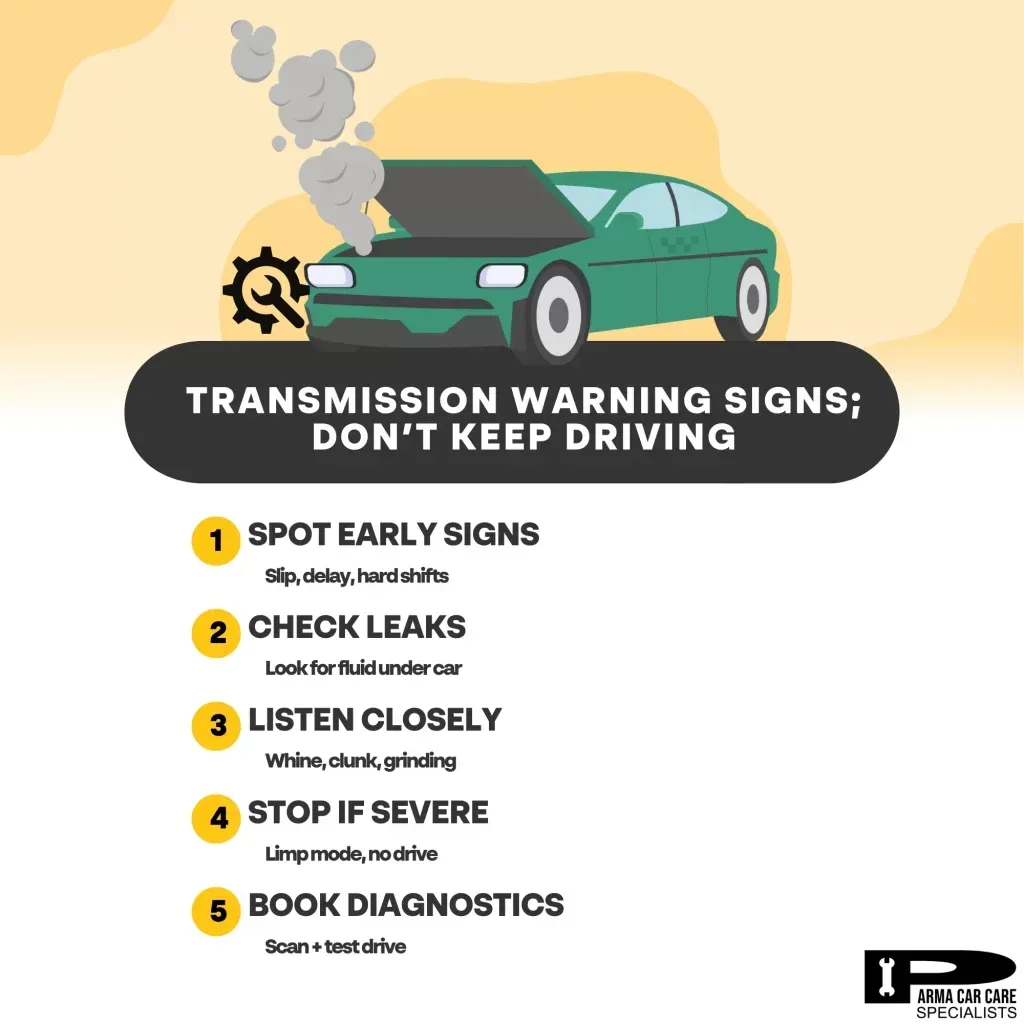
If you notice your vehicle slipping out of gear, experiencing delayed shifts, or having difficulty changing gears, it’s essential to address these issues promptly. Ignoring these signs can lead to more severe transmission damage. Here are four steps you should consider:
- Check Fluid Levels: Low transmission fluid can cause slipping and delayed shifts.
- Inspect for Leaks: Look for any signs of fluid leaks under your vehicle, as this can indicate a serious problem.
- Examine the Transmission Filter: A clogged filter can restrict fluid flow, leading to hard gear changes.
- Get a Diagnostic Check: Have a professional technician run diagnostics to identify underlying issues.
Taking these actions can prevent costly repairs and keep your vehicle running smoothly.
Unusual noises, shuddering, or grinding sensations
Unusual noises, shuddering, or grinding sensations can signal serious transmission issues that require immediate attention. If you hear clunking, whining, or buzzing sounds while shifting gears, it’s a sign of internal damage or low fluid levels. Shuddering during acceleration could indicate a failing torque converter or worn-out clutch components. Grinding sensations while changing gears typically point to problems with the synchronizers or gears themselves. Ignoring these symptoms can lead to more extensive damage and costly repairs. To address these issues, it’s vital to have your vehicle inspected by a professional technician in Parma, Ohio. They can diagnose the problem accurately and recommend necessary repairs or fluid changes to prevent further complications. Don’t delay; addressing these signs promptly can save you time and money.
Signs of Transmission Failure That Require Immediate Attention
If you notice a burning smell, fluid leaks, or signs of overheating, it’s essential to act quickly. Additionally, experiencing a loss of drive, limp mode, or a sudden inability to shift gears signals serious transmission issues that require immediate attention. Ignoring these symptoms can lead to more extensive damage and costly repairs.
Burning smell, fluid leaks, or overheating symptoms
When you notice a burning smell, fluid leaks, or symptoms of overheating, it’s essential to address these signs of potential transmission failure immediately. Ignoring these issues can lead to catastrophic damage and costly repairs. Here’s what to look out for:
- Burning Smell: This often indicates overheating or burning fluid, signaling a serious problem.
- Fluid Leaks: Dark red or brown fluid under your vehicle can point to transmission fluid loss, affecting performance.
- Overheating: If your engine temperature rises, it may be related to transmission issues, requiring prompt investigation.
- Unusual Noises: Grinding or clunking sounds during gear shifts can indicate internal transmission failure.
Timely intervention can save you from more extensive repairs down the line.
Loss of drive, limp mode, or sudden inability to shift
Experiencing a loss of drive, entering limp mode, or a sudden inability to shift gears are serious signs that indicate potential transmission failure. These symptoms can stem from various issues, such as low transmission fluid, a faulty shift solenoid, or internal component damage. When your vehicle enters limp mode, it restricts performance to protect the transmission from further damage, indicating an urgent need for diagnosis. Ignoring these warnings can lead to costly repairs or complete transmission failure. If you encounter any of these issues, it’s essential to stop driving immediately and seek professional assistance. A qualified technician can perform a thorough diagnostic evaluation to identify the root cause and recommend necessary repairs to restore your vehicle’s functionality.
What to Do as Soon as Symptoms Appear
As soon as you notice symptoms of transmission issues, it’s essential to assess whether it’s safe to continue driving. If you detect severe signs, stop the vehicle to prevent further damage. Documenting the symptoms clearly can aid your technician in diagnosing the problem more efficiently.
When it’s safe to drive vs when to stop driving
If you notice early signs of transmission trouble, knowing whether it’s safe to continue driving or if you should stop immediately is essential for your vehicle’s health. Here are key factors to evaluate:
- Warning Lights: If the transmission warning light is illuminated, it’s best to stop driving.
- Strange Noises: Unusual sounds like grinding or whining can indicate a serious issue; don’t drive.
- Slipping Gears: If your vehicle unexpectedly slips out of gear, pull over safely and stop.
- Fluid Leaks: Noticeable fluid puddles under your vehicle may signal transmission problems; cease driving and inspect.
Being proactive can prevent further damage and costly repairs, so trust your instincts and err on the side of caution.
Steps to document symptoms for faster diagnosis
When symptoms of transmission trouble arise, documenting them promptly can significantly expedite the diagnostic process. Start by noting the specific symptoms you experience, such as slippage, unusual noises, or fluid leaks. Record the conditions under which these symptoms occur, whether during acceleration, deceleration, or shifting gears. Include any warning lights that activate on your dashboard. Take note of the vehicle’s mileage and any recent repairs or maintenance performed. If possible, capture video or audio of the symptoms as they happen. This thorough documentation will provide your technician with essential information, enabling them to diagnose the issue more efficiently and accurately. Always share this documentation during your visit to guarantee the best possible service.
How a Shop Confirms the Real Problem
When you bring your vehicle to a shop, they’ll often use scan tools to retrieve diagnostic trouble codes, which provide essential insights into your transmission’s condition. A thorough test drive can further reveal performance issues, helping technicians replicate symptoms you’ve experienced. Accurate diagnostics not only confirm the real problem but also prevent unnecessary repairs, saving you time and money.
Why scan tools and test drives matter for diagnosis
While many assume that a visual inspection is sufficient for diagnosing transmission issues, the reality is far more complex. Scan tools and test drives are essential components of a thorough diagnosis. They allow technicians to gather critical data and confirm the exact problem. Here’s why they matter:
- Error Codes: Scan tools can retrieve diagnostic trouble codes (DTCs) that indicate specific issues within the transmission system.
- Live Data Monitoring: These tools provide real-time data, helping identify performance issues that might not be visible during a visual check.
- Test Drive Feedback: A test drive reveals how the vehicle responds under various conditions, highlighting symptoms that need attention.
- Component Interaction: It helps assess how the transmission interacts with other systems, ensuring a detailed evaluation.
How proper diagnostics prevents unnecessary transmission repair
Proper diagnostics serve as a critical first step in identifying transmission issues, guaranteeing you don’t face unnecessary repairs. By utilizing advanced scanning tools and performing extensive test drives, technicians can pinpoint the root cause of your vehicle’s problems. This process helps distinguish between minor issues, such as a faulty sensor, and major concerns like internal transmission failure.
When a shop conducts thorough diagnostics, they can provide you with an accurate assessment, preventing you from spending money on unwarranted repairs. Additionally, this approach allows for targeted solutions, which can save both time and resources. Trusting skilled professionals to perform diagnostics guarantees your vehicle receives the correct treatment, enhancing its longevity and performance.
Preventing Repeat Issues with Proper Maintenance
To prevent repeat transmission issues, regular fluid service and inspections are essential for extending its life. Maintaining your vehicle not only enhances performance but can also save you from costly repairs down the line. If maintenance isn’t enough, understanding when to seek professional auto transmission repair becomes vital for reliable operation.
Extending transmission life with fluid service and inspections
Maintaining your vehicle’s transmission is essential for its longevity and performance, especially since it plays an important role in power delivery and efficiency. Regular fluid service and inspections can greatly extend its life. Here’s what you should focus on:
- Fluid Level Checks: Regularly inspect transmission fluid levels and top off as needed.
- Fluid Condition: Look for changes in color or smell; burnt or dark fluid indicates it’s time for a change.
- Filter Replacement: Change the transmission filter at recommended intervals to prevent debris buildup.
- Routine Inspections: Schedule professional inspections to catch potential issues, ensuring your transmission operates smoothly.
Auto transmission repair in Ohio: when maintenance isn’t enough
Although regular maintenance is essential for your vehicle’s transmission, there are times when wear and tear or unforeseen issues can necessitate more extensive repairs. If you notice symptoms like slipping gears, delayed engagement, or unusual noises, it’s vital to seek professional help immediately. In Ohio, reputable auto repair shops like Parma Car Care Specialists can diagnose and address these transmission problems effectively. Their ASE-certified technicians utilize advanced diagnostic tools to identify underlying issues that routine maintenance might not catch. Ignoring these signs can lead to more significant damage and costly repairs. By opting for timely transmission repair, you can extend the lifespan of your vehicle and guarantee smooth operation. Don’t wait until it’s too late; address transmission concerns promptly.
Schedule Transmission Repair in Parma, OH at Parma Car Care Specialists
If you’re noticing signs of transmission trouble in your vehicle, it’s essential to address the issue promptly to avoid further damage. At Parma Car Care Specialists, we provide expert transmission repair services tailored to your needs. Here’s what to do:
- Inspect Fluid Levels: Low or dirty transmission fluid can signal a problem.
- Listen for Unusual Noises: Grinding or whining sounds often indicate internal issues.
- Check for Warning Lights: Pay attention to dashboard alerts related to the transmission.
- Schedule a Diagnostic: Our ASE-certified technicians utilize advanced equipment to identify the root cause.
Don’t wait until minor issues escalate. Schedule your transmission repair today at Parma Car Care Specialists for reliable, professional service.
Takeaways
To sum up, staying vigilant for early signs of transmission problems can save you from a world of headaches down the road. If you notice any symptoms, don’t wait for the other shoe to drop, so act quickly to address them. Regular maintenance is key to keeping your transmission in top shape and ensuring your vehicle’s longevity. Remember, at the first hint of trouble, consult a professional to keep your ride running smoothly.
Frequently Asked Questions
How Much Does a Transmission Repair Typically Cost?
A transmission repair typically costs between $1,000 and $3,500, depending on the extent of the damage and your vehicle’s make and model. Always get a detailed estimate before proceeding with any repairs.
Can I Drive My Car With Transmission Issues?
You can’t drive a car with transmission issues without risking further damage. Like a ship with a hole, it’ll sink eventually. It’s best to address problems early to avoid costly repairs and guarantee safety.
How Long Does a Transmission Repair Take?
A transmission repair typically takes anywhere from a few hours to several days, depending on the complexity of the issue. It’s best to consult your mechanic for a more accurate time estimate specific to your vehicle.
What Are the Risks of Ignoring Transmission Problems?
Ignoring transmission problems can lead to severe damage, costly repairs, and safety hazards. If you wait too long, you might find yourself stranded or facing a complete transmission failure, resulting in significant inconvenience and expenses.
Are Automatic and Manual Transmissions Serviced Differently?
Yes, automatic and manual transmissions are serviced differently. Automatic transmissions require fluid changes and filter replacements, while manual transmissions typically involve clutch adjustments and gear oil changes. Each type demands specific procedures for peak performance and longevity.

About the author:
Fred Cerny
Fred Cerny has owned Parma Car Care Specialist since 1989, steadily expanding the business from its humble beginnings with just three bays to a modern facility with eleven bays today. With over 40 years of automotive service and repair experience, Fred has become a trusted name in the community.
He is a certified Master ASE Technician, holding certificates in all nine ASE areas, demonstrating his comprehensive expertise. His background includes a degree in electrical engineering, which has proven to be a valuable asset in diagnosing and repairing today’s increasingly complex vehicles.
Throughout his career, Fred has built a reputation for consistently getting the job done right the first time, emphasizing quality workmanship and professionalism. He is known for his attention to detail and his commitment to customer satisfaction. Fred treats his clients like family, earning their trust and loyalty through honest service and transparent communication.
Under his leadership, Parma C.C.S. has grown not only in size but also in reputation, becoming a go-to destination for reliable automotive care in the area. His dedication to excellence and his passion for cars continue to drive the success of the business, making it a trusted name for vehicle repair and maintenance in the community.
