
When and Why to Replace Brake Rotors
Discover More On
Your brake rotors are a huge part of what keeps you safe every time you hit the pedal, whether you’re stopping quickly in traffic or easing to a smooth halt at a light.
Over time, rotors wear, warp, or rust, and that can lead to longer stopping distances, vibrations, and noisy brakes.
Suppose you’re already hearing grinding, feeling a shake in the steering wheel, or your stopping power just doesn’t feel the same.
In that case, it may be time to talk to a shop that specializes in
brake repair in Parma, OH, and get things checked before it becomes a bigger (and more expensive) problem.
Key Takeaways
- Most brake rotors require replacement between 30,000 and 70,000 miles, depending on driving conditions and mileage.
- Vibrations, noise, or a soft/spongy pedal can all point to rotor problems.
- Excessive heat, rust, and road salt can shorten rotor life and hurt braking performance.
- Routine brake inspections help you catch issues before they damage other brake components.
- Professional brake service can protect both your safety and your wallet over the long run.
Understanding the Role of Brake Rotors in Your Vehicle’s Safety
Brake rotors are at the heart of your braking system. When everything is working right, they help your vehicle slow down smoothly and consistently.
When they’re worn, warped, or damaged, stopping distances increase, and the car can feel shaky or unpredictable under braking.
Knowing what rotors do and how they work alongside your brake pads makes it easier to understand why they eventually need to be replaced.
How Brake Rotors Work with Your Braking System
Every time you press the brake pedal, a lot happens in a split second. Hydraulic pressure pushes the brake pads against the metal rotor on each wheel.
That contact creates friction, which converts your vehicle’s motion into heat and slows the car down.
Rotors are engineered to:
- Provide a flat, even surface for the pads to clamp onto
- Dissipate heat quickly so your brakes stay effective
- Help prevent brake fade during repeated or hard stops
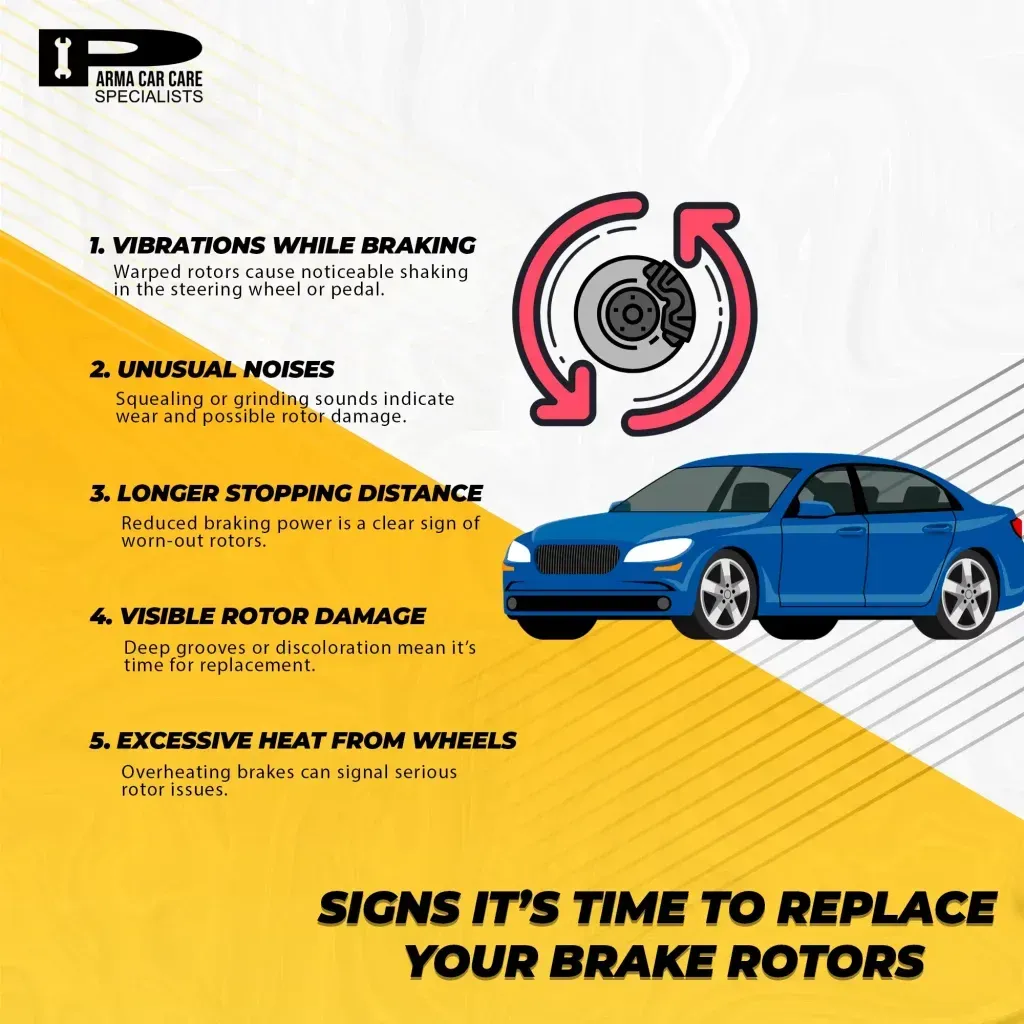
If rotors become too thin, deeply grooved, or warped, you can feel pulsing in the pedal, shuddering in the steering wheel, or notice it takes longer to stop.
At that point, replacement is about more than comfort; it’s about safety and control.
The Difference Between Brake Pads and Brake Rotors
Pads and rotors work together, but they wear and are replaced differently:
- Brake pads
- Softer friction material
- Designed to wear out faster
- Typically replaced more often
- Brake rotors
- Harder metal discs
- Wear more slowly but can warp, crack, or rust
- Must meet a minimum thickness to be safe
If you’re already looking into replacing brake pads, it’s a great time to have the rotors measured and inspected. Pads on bad rotors won’t perform well, and new pads can wear out quickly if the rotors aren’t in good shape.
Signs That Your Brake Rotors Need to Be Replaced
Rotors don’t usually fail overnight. They give you warning signs along the way—if you know what to watch and feel for.
Symptoms of Worn or Warped Rotors
Some of the most common signs that your rotors may be worn or warped include:
- Spongy or soft brake pedal – Pedal travel feels longer or less responsive than usual.
- Decreased stopping power – You need more distance to come to a stop, or the brakes feel “weak.”
- Visible scoring or grooves – Deep lines or blue heat spots on the rotor surfaces.
- Unusual heat from wheels – After driving, one wheel feels much hotter than the others, which can indicate a rotor or caliper problem.
Any of these signs means you should have your brakes inspected as soon as possible. Driving on severely worn rotors can damage pads, calipers, and even compromise your safety.
How Unusual Noises and Vibrations Indicate Rotor Issues
Your brakes will often “talk” to you when something’s wrong.
Pay attention if you notice:
- Grinding or scraping – This often indicates metal-on-metal contact; the pads may be worn out, and the rotor surface is getting chewed up.
- Squealing or squeaking – Can be indicators of pad wear or uneven rotor surfaces.
- Pulsation or vibration when braking – A common sign of warped rotors, causing the pads to grab unevenly as the rotor spins.
If you’re feeling a steady vibration in the steering wheel or brake pedal when you slow down from highway speeds, that’s a classic symptom of rotor issues.
At that point, a visit for brake service at Parma Car Care in Ohio is the safest move.
Factors That Affect Brake Rotor Wear and Longevity
Rotor life isn’t just about mileage. How and where you drive, as well as what your vehicle is exposed to, all play a massive role.
Driving Habits and Their Impact on Brake Life
Your braking style has a direct impact on how quickly your rotors wear out:
- Frequent hard braking – Generates more heat and stress, accelerating wear and the chance of warping.
- Stop-and-go city driving – More braking events mean more heat cycles and faster wear.
- Towing or hauling heavy loads – This adds stress to the entire brake system, including the rotors.
Smoother driving, leaving more space, braking gradually, and avoiding unnecessary hard stops can help extend the life of both pads and rotors.
How Environmental Conditions Contribute to Rotor Damage
Where you drive matters, too. Rotors are exposed to the elements and can suffer from:
- Road salt and moisture – Common in winter climates; can cause rust and corrosion, especially on vehicles that sit for long periods.
- Extreme heat – Long downhill grades or repeated hard stops can warp rotors.
- Dirt and debris – Can get trapped between the pad and rotor, leading to grooves and uneven wear.
If you live in an area where road salt is heavily used, regular brake inspections and cleanings are crucial to catch corrosion before it becomes a safety issue.
When to Seek Professional Brake Inspection and Replacement
You don’t have to wait until your brakes feel terrible to have them checked. A professional inspection gives you a clear picture of rotor thickness, condition, and overall brake health.
The Importance of Routine Brake System Maintenance
Routine brake service isn’t just about replacing parts; it’s about making sure the whole system is working together the way it should. Regular maintenance can:
- Prevent brake failure by catching issues early
- Improve stopping power and consistency
- Extend the life of pads, rotors, and calipers
- Reduce long-term repair costs by avoiding damage from metal-on-metal contact
A good rule of thumb is to have your brakes inspected at least once a year, or whenever you’re in for other work at the trusted car repair shop in Parma, OH.
Technicians can measure rotor thickness, check for warping, look at pad wear, and test for sticking calipers.
Frequently Asked Questions
How often should rotors be changed?
In general, many brake rotors fall into a replacement range of 30,000 to 70,000 miles, but that’s only a guideline. Actual timing depends on:
- Your driving style (gentle vs. aggressive)
- Where you drive (highway vs. stop-and-go city driving)
- Vehicle type and weight
- Exposure to salt, moisture, and heat
Rotors should be replaced when they’re below the minimum thickness, significantly warped, cracked, or severely rusted, even if they have not yet reached a specific mileage.
The safest approach is to have them inspected whenever you replace pads or notice changes in brake feel.
Conclusion
Your brake rotors are crucial to safe, confident stopping, so they’re not something to ignore when they start sending warning signs.
Strange noises, vibrations, reduced stopping power, or visible damage are all reasons to seek a professional opinion immediately.
Staying ahead of rotor wear with regular inspections and timely replacement not only protects your safety, but it also often saves money by preventing damage to other parts of the brake system.
If you suspect an issue or it’s been a while since your last brake check, schedule a visit to Parma Car Care in OH for brake repair today.
A little attention now can deliver a a great deal of mind every time you step on the pedal.

About the author:
Fred Cerny
Fred Cerny has owned Parma Car Care Specialist since 1989, steadily expanding the business from its humble beginnings with just three bays to a modern facility with eleven bays today. With over 40 years of automotive service and repair experience, Fred has become a trusted name in the community.
He is a certified Master ASE Technician, holding certificates in all nine ASE areas, demonstrating his comprehensive expertise. His background includes a degree in electrical engineering, which has proven to be a valuable asset in diagnosing and repairing today’s increasingly complex vehicles.
Throughout his career, Fred has built a reputation for consistently getting the job done right the first time, emphasizing quality workmanship and professionalism. He is known for his attention to detail and his commitment to customer satisfaction. Fred treats his clients like family, earning their trust and loyalty through honest service and transparent communication.
Under his leadership, Parma C.C.S. has grown not only in size but also in reputation, becoming a go-to destination for reliable automotive care in the area. His dedication to excellence and his passion for cars continue to drive the success of the business, making it a trusted name for vehicle repair and maintenance in the community.
