
Why Tire Rotation Is Important for Longevity
Discover More On
Tires are one of the biggest investments you make in your vehicle, and how long they last has a lot to do with how you care for them. One of the simplest, most effective ways to extend tire life is regular tire rotation.By moving your tires from front to back (and sometimes side to side) at the right intervals, you help them wear more evenly, which improves safety, comfort, and fuel efficiency. If you ignore rotations and then start noticing vibrations, odd noises, or warning lights, pairing a tire inspection with services like engine diagnostics can help rule out other issues, too.
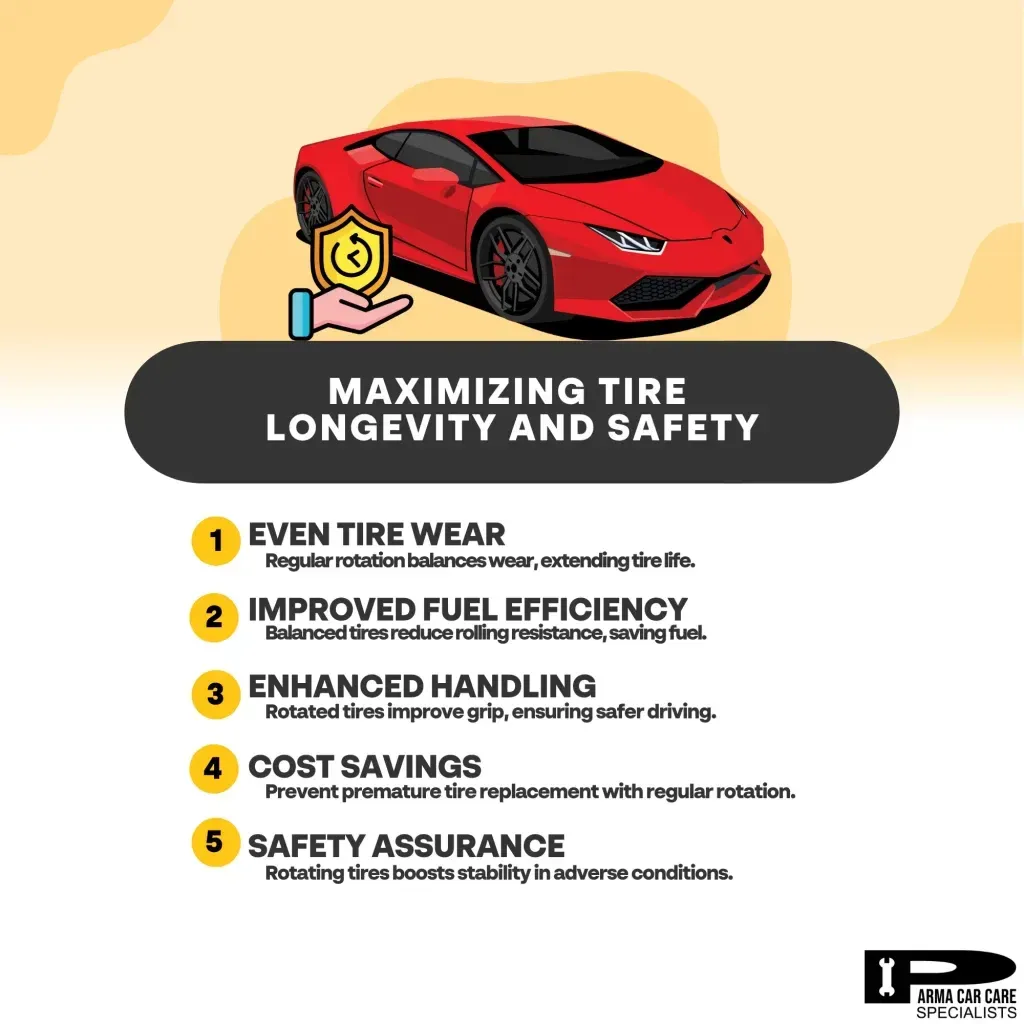
Key Takeaways
- Tire rotation helps even out tread wear, so all four tires last longer.
- Rotating on schedule reduces the risk of costly early replacements.
- Evenly worn tires give you better traction, handling, and braking, especially in bad weather.
- Properly rotated tires help maintain fuel efficiency by reducing rolling resistance.
- Visual inspections, mileage intervals, and seasonal changes are good reminders for when to rotate.
Even Tire Wear
Your tires don’t all wear at the same rate. The front tires usually carry more weight and handle steering and most of the braking forces, which causes them to wear faster than the rears. If you never rotate them, you’ll end up with two worn-out tires and two that still have plenty of tread—wasteful and less safe.
By following a regular rotation schedule (typically every 5,000–7,500 miles, or as recommended in your owner’s manual), you spread that wear more evenly across all four tires. This means:
- Each tire sees a fair share of the workload.
- Tread depth stays more balanced front to rear.
- You can replace all four tires together, which is better for handling and traction.
Even tire wear also keeps road noise more consistent and helps your vehicle feel smoother and more predictable.
Improved Handling and Performance
Tires are the only part of your car that actually touch the road, so their condition has a huge impact on how your vehicle feels and responds. Unevenly worn tires can make your car:
- Pull to one side
- Feel “floaty” or unstable in turns
- Lose grip sooner in the rain
Rotating your tires keeps tread depth consistent at all four corners, which improves:
- Steering response – the car reacts more precisely to inputs.
- Cornering stability – better grip when changing lanes or taking ramps.
- Braking performance – more balanced stopping power in emergency situations.
If you feel shaking at certain speeds or odd behavior after a rotation, it’s worth having a professional check for alignment or suspension issues. In some cases, a deeper look with a check engine light diagnosis and a full inspection can catch underlying problems early.
Improved Fuel Efficiency
Tire condition and fuel economy are more connected than many drivers realize. When tires wear unevenly, they can drag, scrub, or roll less smoothly, forcing your engine to work harder.
Regular tire rotation helps with:
- Reduced rolling resistance – evenly worn tires roll more easily.
- Consistent tire pressure – tires that wear properly are easier to keep in spec.
- Better traction – less slipping and spinning, especially in wet conditions.
All of this adds up to slightly better fuel efficiency and less strain on the rest of your vehicle over time.
Safety First
Safety is one of the biggest reasons to stay on top of tire rotation. Uneven tread depth can cause:
- Longer stopping distances
- Less control in emergency maneuvers
- Higher risk of hydroplaning in heavy rain
Rotations are also a built-in safety check. Every time tires are rotated, a good shop will often spot:
- Early signs of alignment issues
- Suspension problems causing unusual wear patterns
- Damage from potholes, nails, or curbs
That extra set of eyes helps you catch problems before they turn into blowouts, skid risks, or big repair bills.
When to Rotate Your Tires
The best guide is your owner’s manual, but a common recommendation is every 5,000–7,500 miles . Many drivers swap their tires every or every other oil change for convenience and ease of recall.
You should also consider a rotation when you notice:
- Uneven tread wear – one tire or one axle wearing faster than others.
- Vibration or noise – especially changes that appear gradually.
- Seasonal changes – a great time to rotate if you switch between winter and all-season tires.
- After long trips – particularly if they included lots of highway driving with heavy loads.
If you’re unsure what your tires are telling you, local mechanics in Parma can check tread depth, wear patterns, and alignment and recommend the right rotation pattern for your vehicle.
Frequently Asked Questions
What happens if you don’t rotate your tires?
If you skip tire rotations altogether, you’ll likely see:
- Front tires are wearing out much faster than the rears
- Uneven tread patterns, which can cause vibration and noise
- Poor handling and longer stopping distances, especially in wet weather
- Higher long-term costs, because you’ll replace tires more often and may need extra alignment or suspension work
Skipping rotations can also make your vehicle feel less stable at highway speeds and more likely to lose traction in emergency situations. If you’re shopping around for where to get tire rotation and other maintenance done, comparing reputable car repair shops is a smart way to find the right fit.
Conclusion
Regular tire rotation is one of the simplest and most cost-effective maintenance steps you can take. It helps your tires wear evenly, improves handling and fuel efficiency, and keeps you safer on the road—all while saving you money by delaying expensive tire replacements.
Rotate tires every 5,000–7,500 miles for even wear. Check pressure monthly using a gauge—keep it at the manufacturer’s recommended level for better fuel efficiency, safety, and tire life. Do visual inspections during maintenance to catch cuts, bulges, or uneven wear. If you notice vibrations, noises, or handling changes, get a professional check-up early. These habits boost safety, extend tire life, and protect your vehicle investment.

About the author:
Fred Cerny
Fred Cerny has owned Parma Car Care Specialist since 1989, steadily expanding the business from its humble beginnings with just three bays to a modern facility with eleven bays today. With over 40 years of automotive service and repair experience, Fred has become a trusted name in the community.
He is a certified Master ASE Technician, holding certificates in all nine ASE areas, demonstrating his comprehensive expertise. His background includes a degree in electrical engineering, which has proven to be a valuable asset in diagnosing and repairing today’s increasingly complex vehicles.
Throughout his career, Fred has built a reputation for consistently getting the job done right the first time, emphasizing quality workmanship and professionalism. He is known for his attention to detail and his commitment to customer satisfaction. Fred treats his clients like family, earning their trust and loyalty through honest service and transparent communication.
Under his leadership, Parma C.C.S. has grown not only in size but also in reputation, becoming a go-to destination for reliable automotive care in the area. His dedication to excellence and his passion for cars continue to drive the success of the business, making it a trusted name for vehicle repair and maintenance in the community.
