
Have you ever stared at a car repair bill in disbelief? You’re not alone. Certain car repairs can seriously damage your wallet. This blog post will dissect the most expensive car repairs, unveiling the reasons behind the eye-watering costs. Buckle up, gearheads, as we delve into the world of engine overhauls, transmission replacements, and other automotive nightmares.
Understanding Car Repair Costs
Several factors influence the final repair bill:
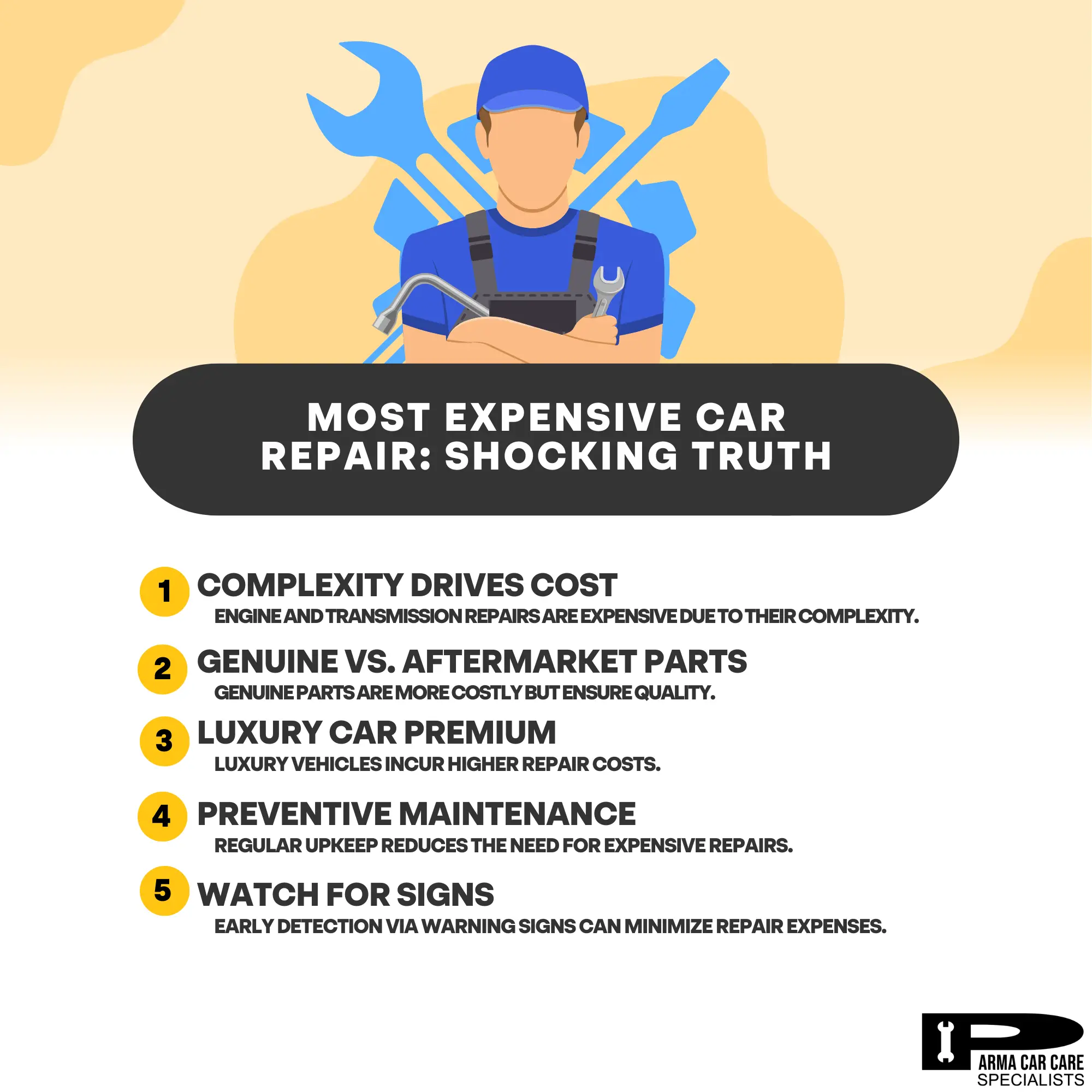
- The complexity of the repair: Replacing a flat tire is a walk in the park compared to a complete engine rebuild, which requires meticulous disassembly, intricate part replacement, and expert reassembly—the more complicated the fix, the steeper the price tag.
- Parts involved: Genuine manufacturer parts, designed and engineered specifically for your car, often come at a premium compared to aftermarket alternatives. While aftermarket parts can be a budget-friendly option, they might guarantee a different level of quality or performance.
- Labor costs: An experienced mechanic with a proven track record will likely command a higher hourly rate than a less seasoned one. Location also plays a role; mechanics in urban areas with a high cost of living typically charge more than those in rural areas.
- Car make and model: Luxury car repairs often involve specialized parts, advanced technology, and mechanics with expertise specific to that brand. All these factors contribute to a heftier bill compared to repairs on a standard sedan.
Engine & Transmission – A Match Made in Repair Hell
The intricate dance between engine and transmission is the heart of your car’s performance. When these mechanical marvels falter, prepare for a potentially nightmarish (and expensive) repair scenario.
- Why they’re top contenders: Both engines and transmissions are comprised of numerous precisely engineered components working in perfect harmony. Extensive labor is required to remove, rebuild, and reinstall them.
Let’s delve into the warning signs that your engine or transmission might be on the brink:
- Engine trouble: Keep an eye on your check engine light. Knocking or ticking sounds emanating from the engine are also cause for concern. Reduced performance and fuel efficiency can indicate failing internal components.
- Transmission problems: Slipping gears, grinding noises when shifting, and difficulty changing gears are all telltale signs of a failing transmission.
Exploring the Dreaded Engine Rebuild
An engine rebuild becomes necessary when significant internal damage occurs due to wear and tear, overheating, or a lack of proper maintenance. Here’s a breakdown of this daunting process:
- Disassembly and inspection: The engine is meticulously taken apart, with each component carefully examined for signs of wear, tear, or damage.
- Replacing worn-out parts: Pistons, rings, bearings, and other vital components are replaced with new ones to restore functionality.
- Remachining or replacing damaged components: Depending on the extent of the damage, crankshafts and cylinder heads might require resurfacing or complete replacement.
- Reassembly and testing: The engine is meticulously assembled, ensuring precise tolerances and proper operation. Finally, it undergoes rigorous testing to confirm its functionality.
Transmission Replacement
Extensive internal damage or overheating can lead to a complete transmission failure, necessitating a replacement. Here’s what this process entails:
- Removal of the old transmission: The faulty transmission is carefully disconnected and removed from the vehicle.
- Installation of a new or rebuilt transmission: A brand new transmission or a meticulously rebuilt unit is then installed in its place.
- Reprogramming or adjusting the TCU (Transmission Control Unit): The TCU, essentially the transmission’s brain, might require reprogramming or adjustments to ensure proper communication with the engine and other car systems.
Other Costly Repairs That Can Drain Your Wallet
While engine and transmission repairs reign supreme in terms of expense, don’t underestimate the financial sting of these other potential repair scenarios:
- Advanced Driver-Assistance Systems (ADAS) malfunction: These high-tech features rely on sophisticated sensors and cameras. If they malfunction, repairs can be quite expensive due to the specialized parts and labor involved.
- Hybrid or electric vehicle battery replacement: The battery pack in a hybrid or electric vehicle is a critical and expensive component. Replacing a failing battery can be a significant financial burden.
- Major electrical system repairs: Electrical system issues like faulty wiring harnesses can be challenging to diagnose and repair, often requiring extensive labor hours to locate and fix the problem.
- Collision repair involving extensive frame damage: Severe accidents that warp the car’s frame can necessitate significant structural repairs, pushing repair costs into the stratosphere.
Luxury Car Repair
Owning a luxury car comes with undeniable prestige but also a steeper repair bill compared to a standard sedan. Here’s why:
- High-performance engines: Luxury cars often boast potent engines that require specialized parts not commonly found on everyday vehicles. These parts can be significantly more expensive.
- Advanced technology with complex components: Luxury car manufacturers incorporate cutting-edge technology like active suspension systems and turbochargers. These intricate components require specialized mechanics and diagnostic tools, further inflating the repair cost.
- Higher labor costs due to specialized mechanics: Mechanics who service luxury cars require extensive training and brand-specific knowledge to work on these complex machines. Their expertise naturally commands a higher hourly rate.
Real-World Examples
Let’s illustrate the eye-watering costs with some real-world scenarios:
- Engine rebuild: A basic engine rebuild on a standard sedan might cost around $3,000, whereas a high-performance engine in a luxury car could easily reach $10,000 or more.
- Transmission replacement: Replacing a transmission on a popular SUV could cost $5,000, while a complex all-wheel-drive transmission in a luxury car could cost $8,000.
- Repairing a damaged ADAS system: Depending on the complexity of the system and the extent of the damage, repairing a malfunctioning ADAS system could range from a few hundred dollars to several thousand.
Prevention is Key
The good news? Diligent car maintenance can significantly extend the lifespan of your car and prevent costly repairs down the road. Here’s why:
- Regular oil changes: Fresh oil lubricates moving parts, reducing friction and wear. Following the manufacturer’s recommended oil change intervals is crucial.
- Regular inspections and tune-ups: These preventive measures allow mechanics to identify and address potential problems before they escalate into major repairs.
- Replacing worn-out parts: Don’t wait for parts to fail. Replacing components like spark plugs and air filters at the recommended intervals can prevent more significant problems in the future.
Warning Signs Not to Ignore
Pay attention to these warning signs, as they could result in a breakdown and a significant repair expense.
- Unusual noises: Clunking, grinding, or knocking sounds emanating from the engine or transmission are cause for immediate concern.
- Checking of engine light: If the check engine light is on, it means the car’s emission control system or other critical functions are failing. Take this warning seriously.
- Leaking fluids: Leaking oil, coolant, or transmission fluid can indicate various issues. Addressing promptly is crucial to prevent further damage.
- Decreased performance and fuel efficiency: If your car struggles to maintain speed or experiences a sudden drop in fuel economy, it might be a sign of underlying problems.
DIY vs. Professional Repair
For simple tasks like changing a flat tire or topping off fluids, a DIY approach might be suitable, especially for car enthusiasts with some mechanical knowledge. However, seeking help from a qualified professional is highly recommended for complex repairs involving engine, transmission, or electrical systems. Messing with complex systems without the proper expertise can lead to costlier repairs.
Building Trust Is Key
Finding a trustworthy mechanic is paramount. Here are some tips:
- Ask friends and family for recommendations: Trusted word-of-mouth referrals are a great way to find a reliable mechanic.
- Check online reviews and ratings: Research online review platforms and read what other customers have to say about different mechanics in your area.
- Look for certifications and affiliations: Seek out mechanics with ASE certification for top-notch service. Affiliations with organizations like the Automotive Service Councils (ASC) are a good sign.
- Get quotes from multiple mechanics before making a decision: Don’t settle for the first quote you receive. Get estimates from several mechanics to compare prices and services offered.
Negotiating Car Repairs
While negotiating the final bill might only sometimes be successful, there’s no harm in politely inquiring about pricing. Here are some tips:
- Explain your situation: Let the mechanic know your budget constraints and explore options that might fit your needs.
- Get quotes for different repair scenarios: Ask about the cost of using aftermarket parts compared to genuine parts. This can sometimes lead to some cost savings.
- Educate yourself about the repair process and parts involved: The more you understand the repair, the better equipped you are to discuss options with the mechanic.
Insurance Coverage
Car insurance can be a lifesaver when faced with unexpected repairs. Here’s a breakdown of the different types of coverage and what they cover:
- Comprehensive Coverage: This comprehensive coverage guarantees complete protection for your car from theft, vandalism, fire, weather damage, and animal collisions, even without an actual collision occurring. It can be helpful if your car suffers damage due to a malfunctioning ADAS system or a faulty electrical component causing a fire.
- Collision coverage: This coverage ensures that your car repairs are taken care of in any accident, regardless of who is at fault. It can be a lifesaver if a collision results in extensive frame damage or other major repairs.
Understanding deductibles and coverage limits
- Deductible: This is the amount you’ll need to pay out of pocket before your insurance kicks in. Increasing your deductible means paying a lower monthly premium.
- Coverage limits: These limits represent the maximum coverage for a repair or loss. Make sure your coverage limits are adequate for significant repair costs.
Planning for the Unexpected
Car troubles can strike at any time. Building an emergency fund specifically for car repairs can provide peace of mind and prevent financial strain in case of unexpected breakdowns. Aim to set aside a small amount of money each month towards this fund. Even a few hundred dollars can make a significant difference when faced with a repair bill.
Conclusion
The most expensive car repairs can leave you speechless. By understanding the factors influencing repair costs, prioritizing preventive maintenance, and knowing how to navigate the repair process, you can be better prepared to handle these situations. Knowledge empowers informed decisions and minimizes the financial impact of car repairs. So, the next time you hear your car whispering trouble, don’t ignore it! Take action to address the issue promptly and keep your vehicle running smoothly for miles to come.
Don’t Let Car Trouble Stop You in Your Tracks: Visit Parma Car Care Specialists Today!
Even with the best preventive maintenance, unexpected car troubles can arise. When faced with a car issue and you need a trusted Cleveland, OH auto repair shop, don’t hesitate to seek professional help. Parma Car Care Specialists is here to diagnose and fix your car problems efficiently and affordably. Consider your search for “Cleveland oh auto repair near me,” over. Our team of certified mechanics will get your car back on the road in no time!