
As the seasons change, you rely on your car’s heating and cooling systems to keep you comfortable. Like your home, your vehicle has its own HVAC (heating, ventilation, and air conditioning) system, requiring regular maintenance and car HVAC repairs to function efficiently.
But what exactly are heating and cooling services in a car? How do they work to create the right temperature inside your vehicle? Let’s dive in and explore the art of automotive climate control.
How do car heating and cooling systems work?
Before we dive into the heating and cooling services that keep your car in top shape, let’s find out how car heating and cooling systems work first. The car’s HVAC system functions by utilizing the principles of thermodynamics to transfer heat energy in or out of the vehicle. Here’s a simplified explanation of how these systems work:
1. Cooling system
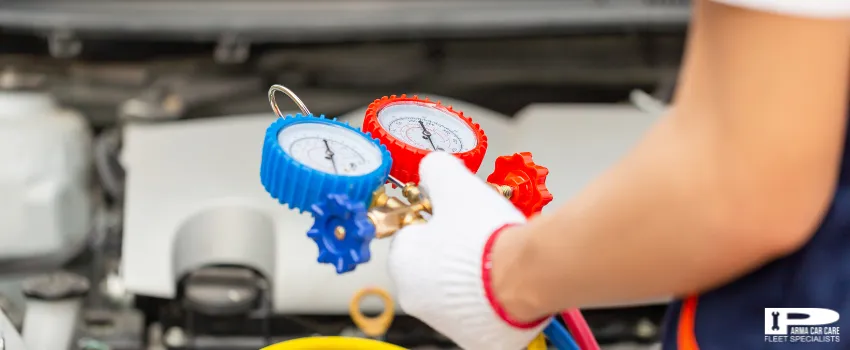
A car’s cooling primarily focuses on the air conditioning (AC) system. It is designed to provide cold air for the interior, keeping the passengers comfortable during hot weather. Car AC units function through a complex process of condensation, compression, and evaporation.
The AC system comprises several components: the compressor, condenser, evaporator, and refrigerant. Each part is vital in cooling the air and removing moisture from the cabin.
2. Heating
A car’s heating system helps maintain a comfortable temperature during colder months. The heating system works by utilizing the excess heat produced by the engine. The engine’s coolant flows through the heater core, which acts as a small radiator, and a fan blows air over it, producing warm air for the cabin.
3. Ventilation
Ventilation is the third component of heating and cooling services in a car. It involves circulating fresh air into the vehicle, removing stale air, and controlling the airflow to ensure passenger comfort. In modern cars, ventilation is typically achieved through mechanical and electronic systems, including vents, fans, and air ducts.
What are the heating and cooling services for a car?
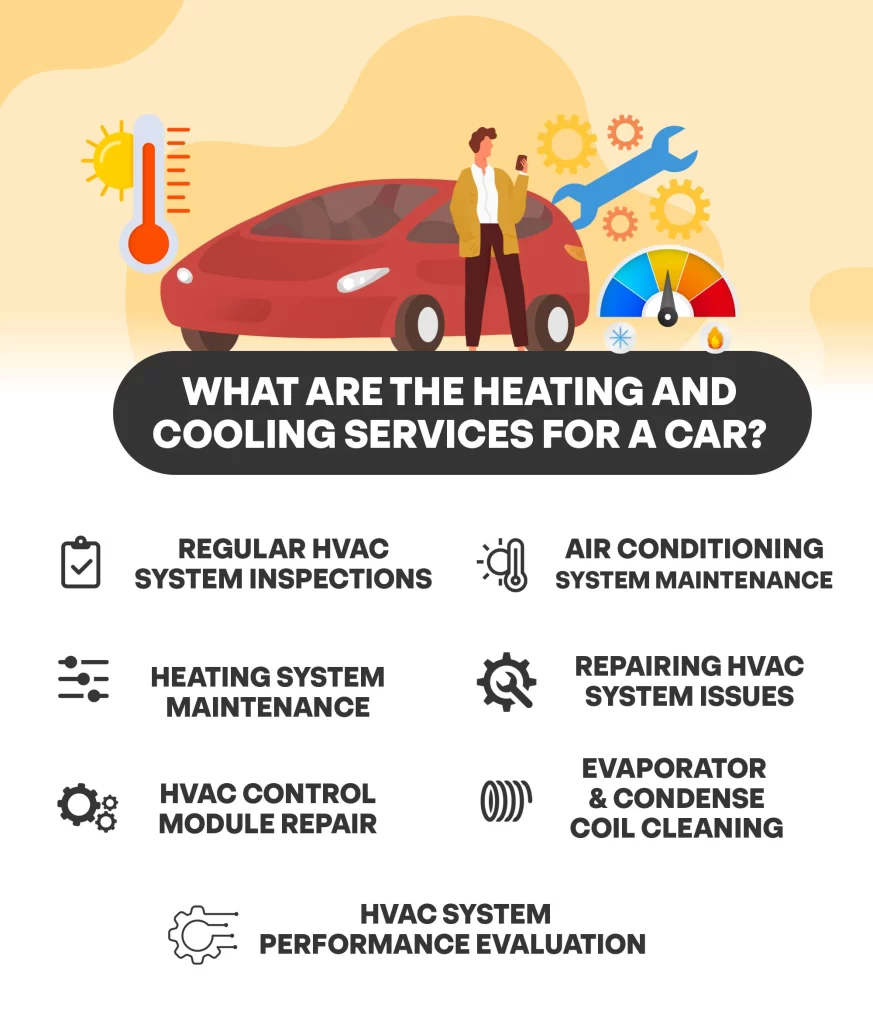
Now that you know how the HVAC system works, it’s time to discuss your car’s heating and cooling services. They encompass a range of maintenance and repair tasks that ensure the efficient operation of the vehicle’s HVAC system. These services include:
1. Regular HVAC System Inspections
To catch potential issues early, it’s essential to have your car’s HVAC system inspected regularly. This ensures all components are in good working order and any necessary repairs can be promptly addressed. During an inspection, a qualified technician will check for leaks, assess the condition of belts and hoses, and test the system’s overall performance.
Generally, the heating and cooling system should be inspected every two years. However, HVAC car repair and a complete replacement are usually necessary after 10-15 years of service.
2. Air Conditioning System Maintenance
One of the primary car cooling services is air conditioning (AC) system maintenance. This includes cleaning or replacing the AC’s air filters and checking the refrigerant levels for optimal cooling performance. Technicians will also inspect the condenser and evaporator coils, ensuring they are debris-free to maximize the system’s efficiency.
3. Heating System Maintenance
Heating system maintenance is about ensuring your car’s heater is ready to keep you warm when the temperature drops. During this service, technicians will inspect and test the heater’s core, blower motor, and thermostat to ensure they function correctly.
4. Repairing HVAC System Issues
When your car’s HVAC system encounters problems, it’s crucial to address them promptly with the necessary car HVAC repairs. These repairs can range from fixing leaks in the system to replacing faulty components, such as compressors or motors.
5. HVAC Control Module Repair
Sometimes, HVAC system problems can be traced to a faulty control module. This component is responsible for regulating the temperature and airflow in your car. If it malfunctions, you may experience issues like inconsistent air distribution or the inability to adjust the temperature. If you encounter this problem, a car HVAC repair is necessary.
6. Evaporator and Condenser Coil Cleaning
Evaporator and condenser coil cleaning is a maintenance task for cars with HVAC systems. These coils in the AC system can accumulate dust and debris over time, reducing their efficiency and causing the AC to blow less cold air. During these car cooling services, a technician will clean the coils, ensuring they’re free of any obstructions and ready to deliver that much-needed blast of cold air.
7. HVAC System Performance Evaluation
A thorough performance evaluation is necessary after any maintenance or HVAC car repair work on your car’s system. This involves testing the system to ensure it’s functioning optimally, delivering the desired temperature and airflow.
Once all the maintenance and car HVAC repairs are done, it’s time to put your car’s HVAC system to the test. A technician will only give it a green light if it’s pumping out the right temperature and airflow, just as you like it.
When to Seek Car Heating and Cooling Services
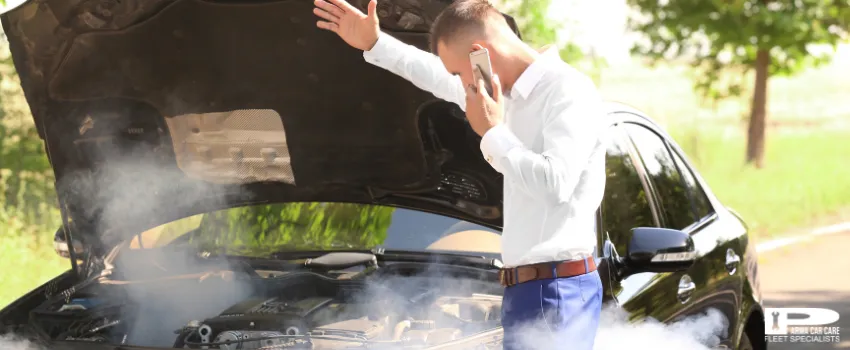
Problems with the car’s heating and cooling systems can cause discomfort and inconvenience, especially during extreme weather conditions. It’s essential to keep an eye out for any signs that may indicate the need for car heating and cooling services. These signs include:
1. Weak or No Airflow
If you notice weak or no airflow when the HVAC system is turned on, it may signify a problem that requires immediate HVAC car repair. A malfunctioning blower motor, a blocked vent, or a faulty fan can cause this.
2. Strange Noises
Unusual noises, such as grinding, squealing, or banging sounds, are never a good sign in any part of your vehicle. When these noises come from the HVAC system, they may indicate a worn-out or damaged component that must be addressed.
3. Unpleasant Odors
Unpleasant smells coming from the vents can be a cause for concern. It may indicate a potential problem in the HVAC system, such as a moldy evaporator or a clogged drain tube.
4. Inconsistent Cooling
If you experience inconsistent cooling, where the air alternates between cold and warm, it may indicate a refrigerant leak in the AC system. Prompt car cooling services can help prevent further damage and ensure efficient cooling when needed.
5. Overheating
While overheating is typically associated with engine troubles, it can also be linked to cooling system problems. If you notice the temperature gauge creeping into the red zone, it’s a clear sign that something is amiss, and immediate car cooling services are required to prevent engine damage.
6. Rapid Temperature Fluctuations
Rapid temperature fluctuations inside the car, not related to adjusting the HVAC controls, may indicate a malfunction in the system. It’s best to have it checked by a professional, as various factors, including a failing thermostat or a problem with the control unit, can cause this issue.
The Bottom Line
A comfortable ride is essential for any journey, and a well-maintained heating and cooling system can make all the difference. Regular maintenance and timely HVAC car repairs are necessary to avoid unexpected discomfort on the road.
Remember, comfort in your car is not just about temperature; it’s also about peace of mind. So, if you want to experience worry-free travels, ensure your vehicle’s HVAC system is in good hands.
Are you looking for seamless HVAC performance?
If your car’s HVAC is acting up, we’ve got the perfect solution for you! Our experts at Parma Car Care Specialists can fix it like nobody’s business. With their exceptional skills, your car will return to delivering cool breezes in no time.
So, what are you waiting for? Give your car the gift of a comfortable ride by scheduling an appointment for AC repair in Old Brooklyn, OH now!